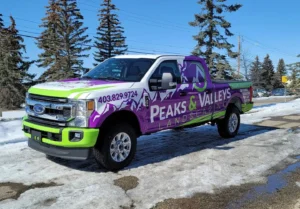
Vehicle wrap vs paint is a common decision for Calgary vehicle owners who want to change appearance, protect resale flexibility, or use a vehicle for branding. The better option depends on how long you plan to keep the vehicle, whether the finish is personal or commercial, and how much value you place on reversibility, repair strategy, and downtime. Ingraph handles both branded and colour-change wrap projects, so this comparison focuses on where each option makes more financial and practical sense.
Comparing Vehicle Wraps and Paint Across Key Factors
This section compares the core decision factors that typically determine whether a vehicle wrap or paint is more appropriate for a specific use case in Calgary.
| Factor | Vehicle Wrap | Paint |
|---|---|---|
| Upfront cost | Typically $3,000 to $6,000+ for full wraps depending on vehicle size, coverage, and design | Quality repainting often ranges from $5,000 to $15,000+ depending on prep, materials, and labour |
| Lifespan | Typically 3 to 7 years with proper care and storage conditions | 7 to 15+ years depending on factory vs refinish quality and maintenance |
| Maintenance | Requires hand washing, avoiding abrasive brushes, and monitoring edges and seams | Standard paint-safe washing, polishing, and correction methods apply |
| Reversibility | Removable if underlying paint is in good condition and removed within service life | Not reversible once refinished |
| Downtime | Usually 2 to 5 days depending on prep and installation scope | Often 1 to 3 weeks due to prep, curing, and finishing |
| Best fit | Business branding, leased vehicles, temporary colour changes, flexible ownership plans | Long-term permanent finish changes, restoration work, or vehicles already needing refinishing |
Maintenance differences affect both effort and cost. Wraps require non-abrasive washing and attention to edges to prevent lifting, while paint allows more aggressive correction but can accumulate permanent damage such as chips or oxidation that require refinishing.
Cost Breakdown: Upfront vs Long-Term Investment
Cost differences are not limited to the initial quote. The long-term impact depends on how each option is maintained, repaired, or updated over time.
Initial Cost Differences Between Wraps and Paint
A wrap usually creates a more predictable starting cost because pricing is driven by coverage area, film type, surface condition, and installation complexity. A repaint has a wider cost range because it depends heavily on preparation, including dent repair, sanding, priming, masking, and finishing quality.
A quality repaint typically includes full surface correction, multi-stage paint application, and clear coat finishing using higher-grade materials. Lower-cost paint work often reduces prep time or material quality, which directly affects durability and consistency.
For many Calgary drivers, the direct comparison is not wrap vs low-cost paint. It is wrap vs properly executed paint work. That distinction matters because a lower-tier repaint may degrade faster, while a professionally installed wrap maintains a more predictable performance over its service life.
Long-Term Costs Including Repairs and Rework
Over three to five years, long-term cost depends on how each option fails and how easily it can be corrected. Wrap damage is often localized, allowing individual panel replacement if matching film is available. Paint damage usually requires blending into adjacent panels, increasing labour and cost.
Wraps can also preserve the original paint underneath when installed and removed within their intended lifespan, which may support resale value if the original finish remains intact. This depends on the condition of the paint before installation and proper removal timing.
Rework also follows different logic. Businesses can update wraps to reflect new branding without refinishing the vehicle. Personal vehicle owners who expect no visual changes over many years may find paint more cost-effective. The key variable is how often changes are expected.
Durability in Calgary Conditions: Cold, UV, and Road Salt
Calgary’s environment introduces stress factors that directly affect both wraps and paint, particularly through seasonal variation and road conditions.
How Wraps Handle Seasonal Exposure
Wraps hold up well when the surface is properly prepared, the film is installed correctly, and the vehicle is maintained with wrap-safe washing methods. Calgary conditions create stress through winter temperature swings, strong UV exposure, gravel, and road salt.
Salt and debris primarily affect wrap edges and high-impact areas, where repeated exposure can weaken adhesion over time. Gravel impact can puncture or chip the film, particularly on leading surfaces. Vehicles stored indoors or washed regularly tend to maintain wraps closer to the upper end of their lifespan range.
If a wrap is left on beyond its intended service life, the adhesive can bond more aggressively to the paint, making removal more difficult and increasing the risk of residue or surface damage.
How Paint Ages Under the Same Conditions
Paint generally has the advantage in long-term permanence, especially when factory-applied. However, Calgary conditions create different failure patterns. Road salt can accelerate corrosion if the paint surface is compromised, while gravel impact leads to chipping that exposes underlying layers.
Outdoor storage increases UV degradation and oxidation, while indoor storage slows these effects. Refinished paint varies in durability depending on prep and material quality, which means not all paint jobs perform equally over time.
Paint allows for correction such as polishing or refinishing, but damage that penetrates the clear coat often requires more extensive repair.
Branding and Flexibility: Where Wraps Outperform Paint
For use cases involving business vehicles or evolving visual needs, flexibility becomes a primary factor rather than a secondary one.
Advertising Value for Business Vehicles
For business vehicles, wraps often deliver stronger ROI than paint because they provide both visual change and marketing function. A branded vehicle generates impressions while parked, driving, or at job sites, especially in dense service areas or high-traffic routes.
The value depends on usage. Vehicles that are frequently driven, parked in visible locations, or used across multiple service areas generate more exposure. Low-usage vehicles or those stored indoors most of the time may see reduced marketing return.
Ability to Update or Remove Branding
Branding often changes over time, including logos, services, and contact information. A wrap allows these updates without permanent alteration to the vehicle.
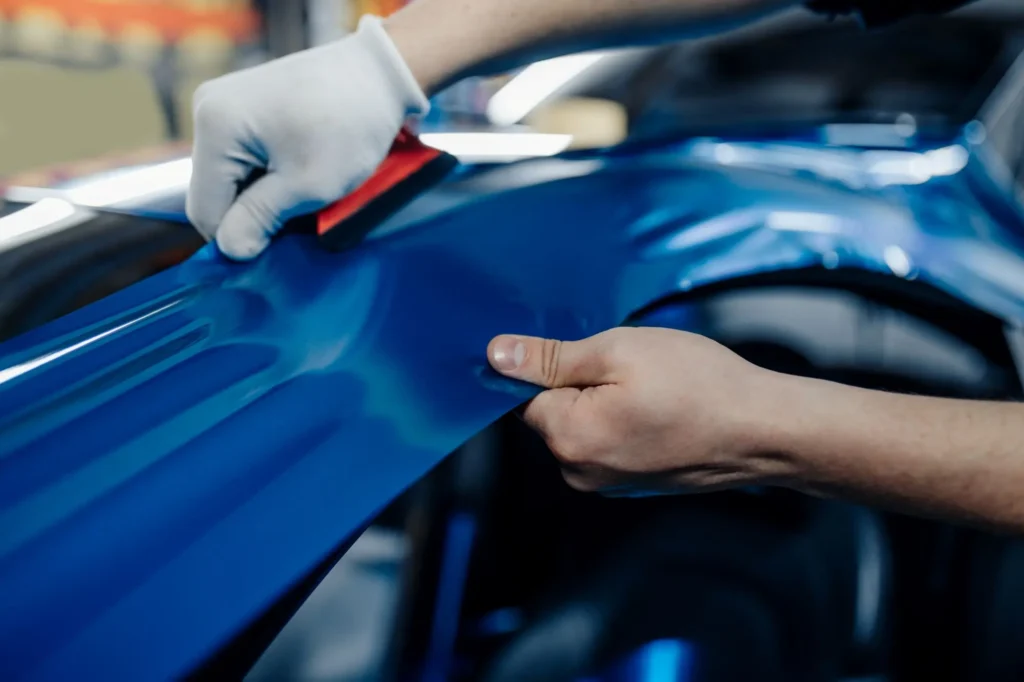
This flexibility is particularly relevant for leased vehicles or growing fleets. Removal is typically straightforward if performed within the film’s service life and when the original paint was in good condition. Wraps do not correct underlying paint defects and may make existing imperfections more visible.
Ownership Scenarios That Change the Decision
The best option often depends more on ownership timeline and intent than on material differences alone.
Short-Term Ownership or Leasing
Wraps are generally more suitable for short-term ownership or leased vehicles because they allow visual or branding changes without permanent alteration. Removal may support lease return conditions if the original paint remains intact and the wrap is removed properly within its service life.
If the underlying paint is damaged before wrapping, removal may not restore the vehicle to lease-ready condition. This factor should be assessed before installation.
Long-Term Personal Vehicle Investment
Paint becomes more relevant when the vehicle is a long-term asset and the owner wants a permanent finish change. This applies to restorations or vehicles requiring significant paint correction.
For mid-term ownership of approximately three to five years, both options can be viable. Wraps provide flexibility and lower change cost, while paint may become more cost-effective if no changes are expected and the finish will be maintained over a longer period.
Choosing the Right Option for Your Vehicle and Goals in Calgary
Choosing between a wrap and paint depends on ownership duration, intended use, and whether flexibility or permanence is more important.
A wrap typically delivers better ROI when the vehicle is used for business branding, when visual changes may occur, or when ownership is shorter than five years. It also fits situations where maintaining resale flexibility is important.
Paint becomes more cost-effective when the vehicle will be kept long term, no design changes are expected, and the finish is intended to remain permanent. As a general guideline, repainting becomes more practical when the vehicle already requires body or paint correction, or when the owner does not plan to change the finish again within the next 7 to 10 years.