Vehicle wrap lifespan in Calgary depends on climate exposure, usage patterns, and how the wrap is maintained over time. Most wraps do not fail all at once. They degrade gradually based on UV exposure, winter conditions, and surface wear. Ingraph installs wraps with Calgary conditions in mind, so this breakdown focuses on realistic expectations rather than ideal manufacturer claims.
Average Lifespan of Vehicle Wraps in Calgary
In Calgary conditions, most professionally installed vehicle wraps last between 3 to 7 years. Printed commercial wraps typically fall closer to the 3 to 5 year range due to ink and laminate wear, while solid colour change wraps can extend toward 5 to 7 years under similar conditions.
Manufacturer claims often suggest longer lifespans, commonly in the 5 to 10 year range under controlled conditions. In Calgary, outdoor exposure, UV intensity, and winter conditions typically reduce real-world lifespan compared to those estimates.
Vehicles parked outdoors year-round and driven frequently in winter conditions tend to fall near the lower end of the range. Vehicles stored indoors and driven less frequently can approach the upper end. Horizontal surfaces such as hoods and roofs degrade faster than vertical panels due to direct UV exposure.
Key Factors That Impact Wrap Longevity
Wrap lifespan is influenced by multiple factors, but UV exposure and winter conditions are typically the dominant contributors in Calgary.
Exposure to Sunlight and UV
UV exposure accelerates fading and material breakdown. Calgary’s elevation increases UV intensity, which shortens lifespan compared to lower-altitude regions.
Darker colours and certain finishes such as matte or satin tend to show fading and surface wear faster than lighter or gloss finishes. Vehicles parked outdoors for extended periods will experience faster degradation, while covered or indoor storage significantly slows UV-related wear.
UV protection strategies such as covered parking or reduced exposure time can help maintain appearance longer, but they do not eliminate degradation.
Winter Conditions: Salt, Ice, and Temperature Swings
Winter conditions introduce both chemical and physical stress. Road salt can accumulate along edges and seams, contributing to adhesive breakdown if not removed. Gravel and debris cause physical impact damage, particularly on leading surfaces.
Freeze-thaw cycles create expansion and contraction in the film, which contributes to long-term material fatigue. Frequent winter washing helps remove salt buildup, but aggressive washing methods can increase surface wear if not done correctly.
Driving Frequency and Storage Conditions
Driving frequency directly affects exposure. Daily commercial vehicles experience more wear due to constant exposure to debris, UV, and contaminants. Occasional-use personal vehicles experience slower degradation.
Highway driving increases impact from debris at speed, which can accelerate wear on front-facing surfaces. City driving typically results in less impact damage but may increase exposure to contaminants.
Storage conditions remain a key variable. Indoor storage reduces combined UV and environmental stress, while full-time outdoor parking accelerates wear across all panels.
Maintenance Practices That Extend Wrap Life
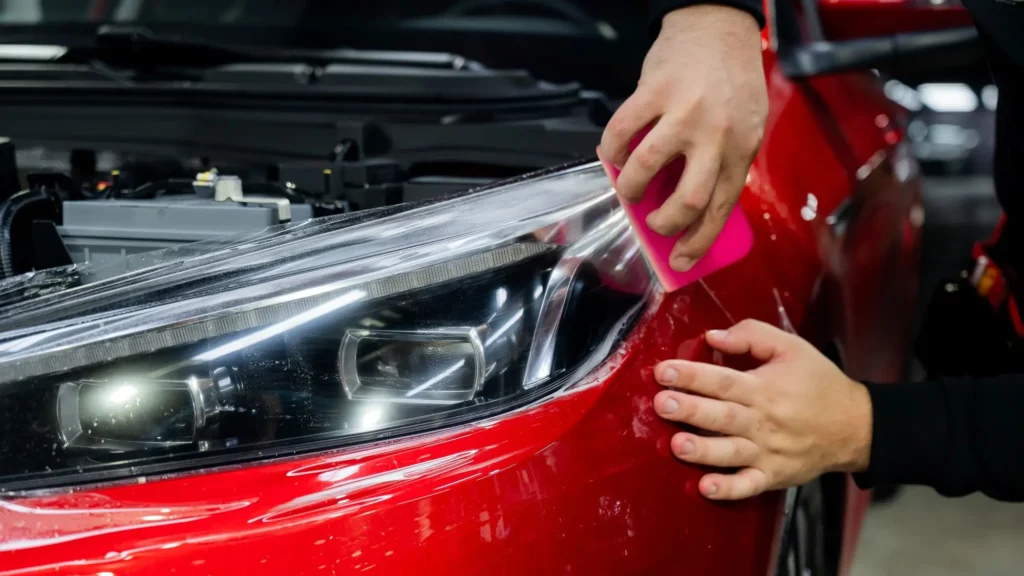
Proper maintenance helps a wrap reach the upper end of its lifespan range but does not extend it beyond material limits.
- Cleaning frequency: Regular washing, especially during winter, removes salt and contaminants that degrade the film.
- Washing methods: Hand washing with soft materials and wrap-safe cleaning products reduces abrasion. Brush-based automatic washes increase surface wear and edge lifting risk.
- Storage tips: Indoor or covered parking reduces UV exposure and protects against environmental stress.
Professional detailing can help maintain appearance and reduce buildup of contaminants, but it does not significantly extend overall lifespan beyond the expected range.
Early Signs of Wear and When to Take Action
Wrap degradation begins gradually, and early signs indicate when maintenance or repair may still be effective.
Fading, Peeling, and Edge Lifting
Fading typically appears first on surfaces exposed to direct sunlight. Edge lifting may occur along seams, corners, or high-stress areas where adhesion weakens over time. Peeling or cracking indicates more advanced wear.
If left unaddressed, edge lifting and peeling will typically worsen, as exposure allows moisture and debris to enter beneath the film and accelerate failure.
When Repairs Are Still Viable
Repairs are viable when damage is localized and the surrounding film remains stable. Individual panels can be replaced if matching material is available.
Colour matching becomes more difficult as the original wrap ages due to fading. New material may not match older sections, especially on highly exposed panels. Repaired sections may age differently from the original wrap, creating visible variation over time.
When Replacement Becomes the Better Option
Replacement becomes the better option when wear affects multiple panels, adhesion failure is widespread, or visual consistency cannot be maintained.
A practical threshold is when repair costs approach a significant portion of replacement cost or when multiple panels require replacement. At that point, full replacement is typically more efficient.
Delaying replacement beyond the intended lifespan can increase removal difficulty. Adhesive may bond more aggressively over time, increasing the risk of residue or surface issues during removal.
Setting Realistic Expectations for Your Vehicle Wrap
Wrap lifespan varies based on usage and environment. Commercial vehicles generally experience faster wear due to higher mileage and continuous exposure, while personal vehicles with controlled storage can approach the upper lifespan range.
Maintenance helps a wrap reach the upper end of its expected lifespan but does not extend the overall range. In Calgary, a realistic service window is approximately 3 to 7 years depending on exposure, storage, and usage conditions.