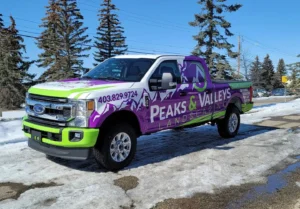
Single vehicle branding and fleet wraps solve different business problems. A single wrapped vehicle can establish local visibility for a newer company, while fleet branding is designed to maintain consistency, recognition, and operational efficiency as the number of vehicles increases. As businesses expand across Calgary and surrounding service areas, branding systems that worked for one or two vehicles often become harder to manage across a larger fleet. Ingraph helps businesses evaluate when fleet branding becomes more efficient than managing individual vehicle graphics separately.
When Single Vehicle Branding Starts to Break Down
Individual vehicle branding is often effective during early growth stages because it allows businesses to establish visibility without committing to a full fleet rollout. Problems usually begin when expansion outpaces branding consistency across vehicles, locations, or subcontracted units.
Visibility Limitations Across Service Areas
One branded vehicle can generate strong exposure within a concentrated area, but visibility becomes diluted once service territory expands. Businesses operating across multiple Calgary quadrants or surrounding municipalities often find that one or two branded vehicles no longer create consistent market presence.
Scheduling also affects exposure. A single branded vehicle can only represent the business where it is physically operating, which limits visibility when crews, deliveries, or appointments occur simultaneously across different locations.
Brand Inconsistency Across Multiple Vehicles
Brand inconsistency becomes more noticeable as additional vehicles are added gradually over time. Different layouts, outdated logos, mismatched colours, partial graphics, or unbranded vehicles can make the business appear less established than it actually is.
Inconsistent branding also creates operational complications when vehicles are reassigned, replaced, or temporarily substituted. Without centralized standards, branding decisions often become reactive instead of scalable.
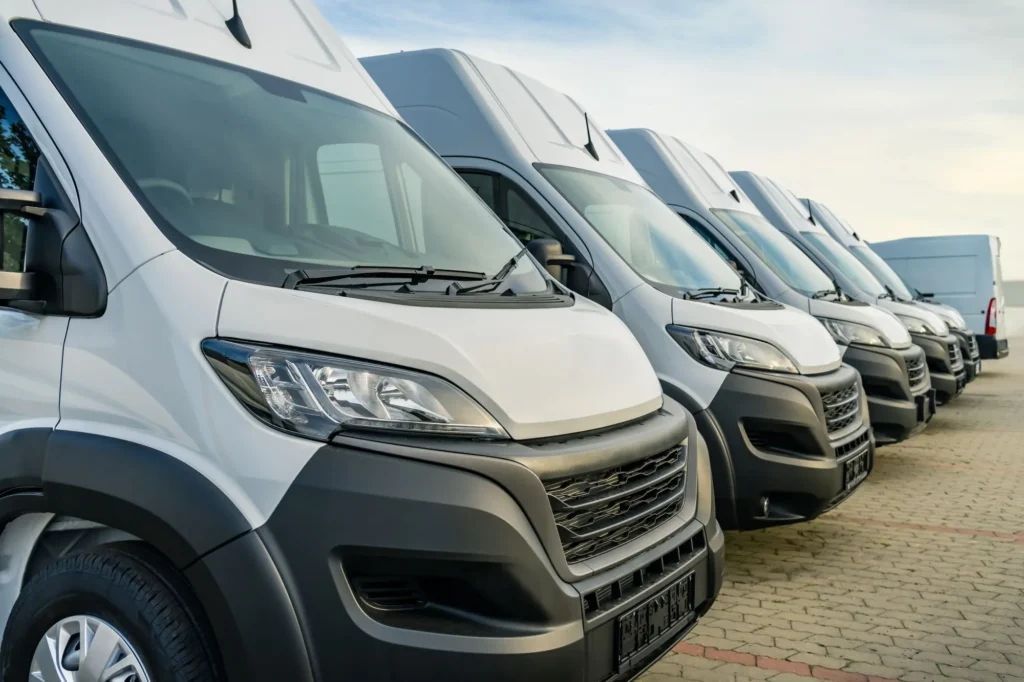
What Changes When You Move to Fleet Wraps
Fleet branding changes vehicle graphics from isolated marketing assets into a controlled branding system. The focus shifts from decorating individual vehicles to maintaining consistency across the entire operating fleet.
Consistency Across All Vehicles
Fleet wraps create uniform branding across service vehicles regardless of vehicle size or configuration. This consistency improves recognition because customers repeatedly see the same colours, logo placement, typography, and messaging across multiple locations and service calls.
Consistent fleet branding can also affect perceived company scale. Businesses with coordinated vehicle graphics often appear more established and operationally organized than companies using mixed or inconsistent branding across vehicles.
Operational Efficiency in Deployment
Fleet programs simplify onboarding new vehicles because branding standards are already established. Instead of redesigning each vehicle individually, templates and production specifications can be adapted across similar fleet units.
This becomes more important as vehicle turnover increases. Service businesses replacing leased vehicles, adding seasonal units, or expanding crews benefit from having repeatable production standards rather than restarting the branding process each time.
Centralized Brand Control
Centralized brand control reduces variation across departments, subcontractors, or multiple installers. Businesses operating larger fleets often need standardized placement rules, approved colour profiles, and scalable production files to maintain consistency over time.
This also makes future updates more manageable. If branding evolves later, controlled fleet systems are easier to revise systematically than vehicles wrapped independently without shared standards.
Cost Scaling: One-Off vs Fleet Investment
Fleet branding usually requires higher upfront coordination than wrapping a single vehicle, but the long-term cost structure changes as the number of vehicles increases.
| Branding Approach | Cost Per Vehicle | Total Fleet Rollout Complexity | Long-Term ROI |
| Individual Vehicle Branding | Higher variation between vehicles | Increases as fleet grows | Less efficient when scaling across multiple units |
| Fleet Wrap Program | More standardized across vehicles | Lower operational complexity once systems are established | Stronger long-term consistency and recognition across markets |
Cost efficiency is not only based on installation pricing. Businesses also need to consider redesign frequency, production consistency, replacement cycles, scheduling coordination, and long-term branding maintenance across the fleet.
Which Businesses Benefit Most from Fleet Wraps
Fleet branding becomes more valuable when vehicle visibility directly affects lead generation, customer recognition, or operational trust across multiple locations.
Service-Based Businesses with Multiple Vehicles
Contractors, trades, delivery companies, maintenance providers, and mobile service businesses often benefit the most from fleet branding because vehicles operate continuously in public-facing environments.
Repeated exposure across multiple branded vehicles can strengthen recognition faster than relying on isolated vehicle graphics. Consistent branding can also improve customer confidence when multiple crews arrive at different locations under the same visual identity.
Companies Expanding Into New Areas
Businesses entering new Calgary markets or surrounding municipalities often use fleet branding to establish familiarity faster across unfamiliar service areas.
A coordinated fleet creates repeated exposure in new regions without relying entirely on digital advertising or fixed signage. This becomes more valuable when vehicles operate daily within residential neighbourhoods, commercial districts, or construction corridors.
When Individual Vehicle Branding Still Makes Sense
Fleet branding is not automatically necessary for every business. Smaller operations may not gain enough operational benefit from full fleet standardization during early growth stages.
Early-Stage Businesses
Newer businesses often benefit from wrapping one primary vehicle first while testing branding direction, service demand, and long-term positioning before expanding to additional units.
This also provides flexibility if the company later changes logos, messaging, or service focus. Revising one vehicle is significantly simpler than updating an entire fleet during early-stage growth.
Low Vehicle Count Operations
Businesses operating one or two vehicles full time may not require formal fleet systems if the vehicles already maintain consistent branding and operate within concentrated service areas.
In some cases, partial graphics or simpler branding approaches may provide enough visibility without the coordination involved in larger fleet programs.
Transition Point: When to Scale from One to Many
The transition toward fleet branding usually begins when adding vehicles starts creating inconsistency, operational delays, or branding gaps across the business. This often happens once multiple crews operate simultaneously, vehicles are replaced more frequently, or service areas expand beyond a concentrated local radius.
Many businesses phase into fleet branding gradually rather than wrapping every vehicle at once. Older vehicles may retain existing graphics while new additions follow updated fleet standards. This staged approach allows companies to improve consistency over time without requiring a full immediate rollout.
Businesses should also consider future branding flexibility before scaling. If logos, messaging, or service divisions are likely to change soon, scalable fleet systems should account for future updates to avoid fragmented branding across newer and older vehicles.
Choosing the Right Approach for Your Growth Stage in Calgary
The right branding strategy depends on fleet size, service area coverage, vehicle turnover, and long-term growth plans rather than assuming fleet wraps are necessary for every business. Smaller Calgary companies may benefit more from focused branding on a limited number of vehicles, while expanding operations often require stronger consistency and centralized control as the fleet grows.
Ingraph helps Calgary businesses evaluate whether individual vehicle branding or fleet wrap systems better match their operational scale, expansion plans, and long-term branding requirements.